Climate & Environment
Climate Science
Discover governing equations of climate dynamics — energy balance laws, circulation patterns, and feedback mechanisms.
One of 34 industries across 8 sectors served by ARDA — the research discovery engine.

The Challenge
Why Climate Science needs a new approach to discovery
Climate science operates on observational records, satellite measurements, reanalysis products, and model outputs that together encode the governing dynamics of Earth's climate system — energy balance, atmospheric and oceanic circulation, radiative forcing, and feedback mechanisms. These datasets are massive, multivariate, and span decades of spatiotemporal coverage. Yet extracting the governing equations of climate dynamics from this data remains dominated by hypothesis-driven approaches: researchers propose specific model structures, parameterize sub-grid processes, and calibrate against observations, leaving large portions of the observational record underutilized for direct law discovery.
General circulation models encode decades of climate physics knowledge but rely on parameterizations for processes below their grid resolution — cloud formation, convective transport, boundary layer dynamics — that introduce systematic uncertainties. Statistical downscaling and empirical approaches capture correlations but lack the causal structure needed to distinguish forced responses from internal variability. Attribution studies require careful causal reasoning that purely correlative methods cannot provide. The result is a gap between the observational data available and the governing equations that would enable more precise climate projections, especially for regional dynamics and feedback quantification.
The ARDA Approach
How ARDA transforms climate science
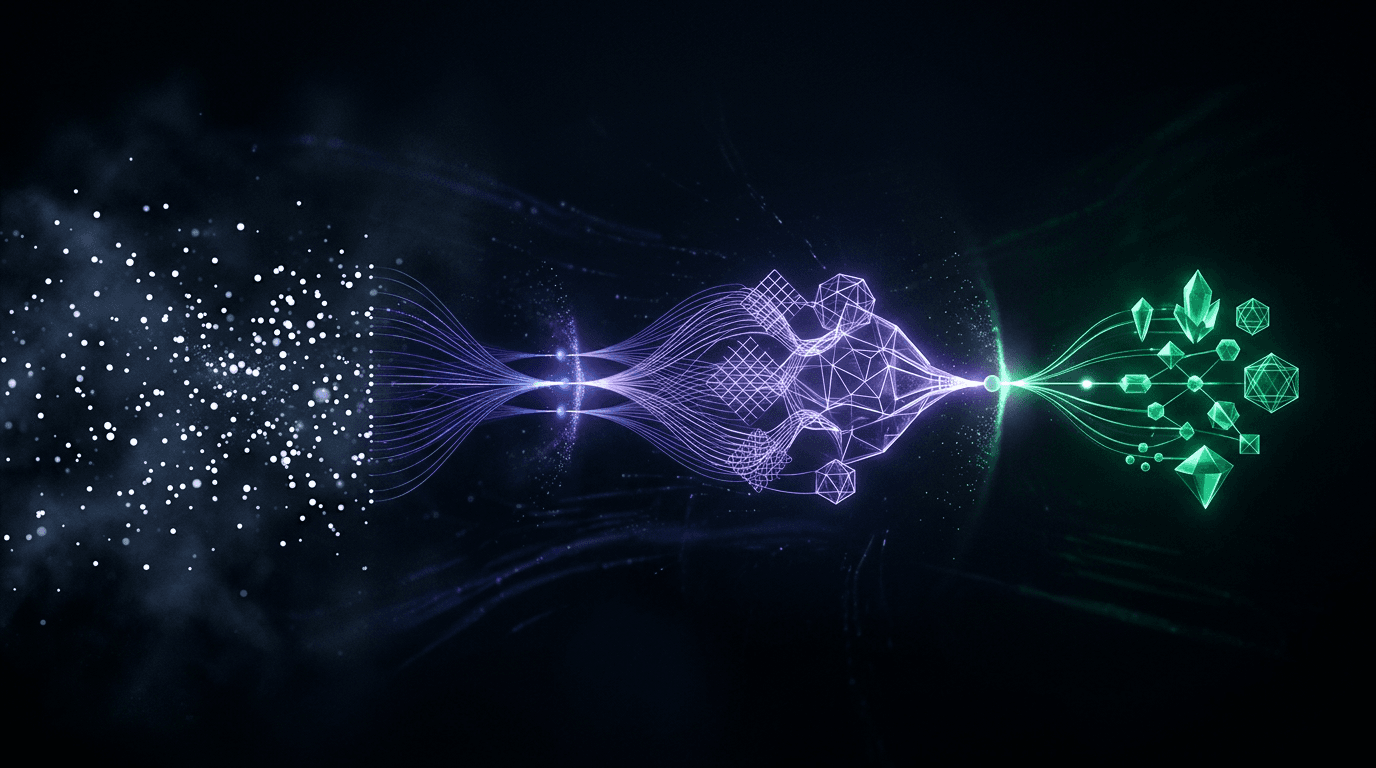
ARDA ingests raw climate data — temperature records, precipitation time-series, radiative flux measurements, ocean heat content profiles — and produces typed scientific claims about governing climate dynamics. Rather than requiring pre-specified model structures, ARDA discovers energy balance laws, circulation governing equations, and feedback mechanisms directly from observational and reanalysis data. Its discovery modes explore the space of possible governing relationships, identifying the mathematical forms that best explain observed climate behavior without constraining the search to conventional parameterization families used in general circulation models.
ARDA's governance stack addresses the reproducibility demands of climate science directly. The Evidence Ledger provides deterministic replay for every climate discovery, ensuring that governing equations can be independently verified — a critical requirement when policy decisions depend on scientific confidence. Conservation law detection validates energy and mass conservation in climate data, identifying violations that signal data quality issues or missing physical processes. The Truth Dial enables teams to set confidence thresholds appropriate to the application, from exploratory research to policy-informing assessments, with negative controls ensuring robustness.
Discovery Engine
The engine behind the discovery
The Causal mode and Symbolic modes are most critical for climate science. Causal mode identifies causal relationships in climate data — distinguishing forced responses from internal variability, mapping teleconnection pathways, and quantifying feedback strengths — producing causal graphs that support attribution and projection. The Symbolic mode discovers closed-form energy balance equations and circulation scaling laws directly from observational data. The Neuro-Symbolic mode handles the high-dimensional spatiotemporal structure of climate datasets, with neural encoders capturing spatial patterns and symbolic distillation extracting interpretable governing laws suitable for comparison with established climate physics.
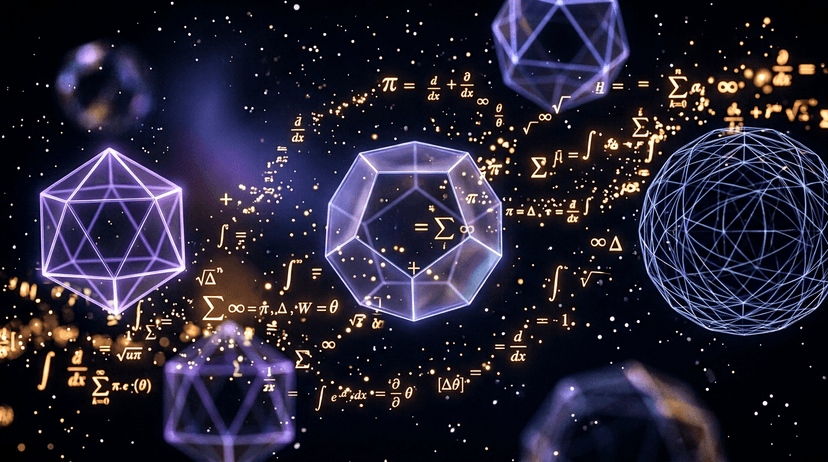
Symbolic
Discovers closed-form governing equations — the explicit mathematical laws that describe how systems behave. Produces human-readable, interpretable formulas.

Neural
Deploys physics-informed architectures for high-dimensional, symmetry-rich data where closed-form solutions may not exist.
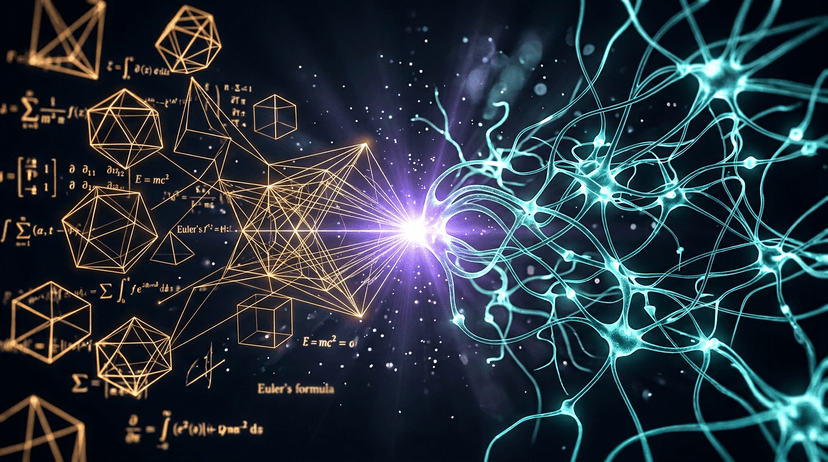
Neuro-Symbolic
Combines neural encoding with symbolic distillation — learns complex representations first, then extracts interpretable governing laws from those representations.
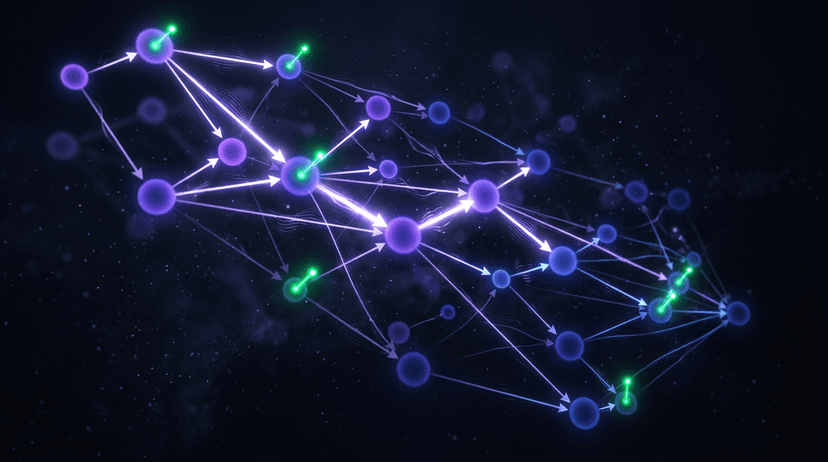
CDE
The Causal mode, powered by ARDA's Causal Dynamics Engine (CDE), discovers true cause-and-effect relationships from observational data — identifiable causal graphs, regime classifications, and intervention predictions.
Typed Scientific Claims
What ARDA discovers
Every discovery ARDA produces is a typed scientific claim — not a black-box prediction, but a governed, reproducible, auditable piece of scientific knowledge with full provenance.
- Energy balance governing equations
- Circulation dynamics models
- Climate feedback mechanisms
- Teleconnection causal graphs
- Carbon cycle dynamics

Governed Discovery
Built for regulated industries
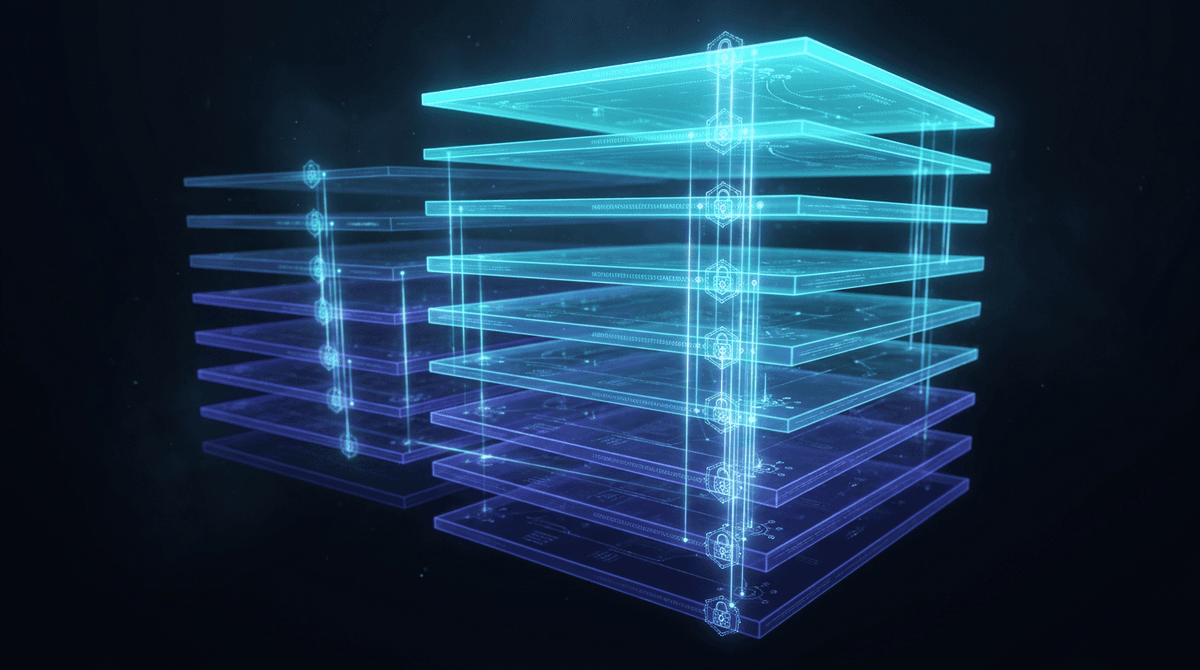
Every discovery ARDA produces carries governance metadata: a Truth Dial setting that controls the confidence threshold, an evidence ledger entry with deterministic replay recipe, and negative control results including bootstrap stability, out-of-distribution testing, and feature shuffle validation.
For climate science, this means every scientific claim is auditable, reproducible, and suitable for regulatory submission, peer review, or board-level decision-making. The governance stack is not optional — it is embedded in every discovery run.
Same sector
Related industries
Oceanography
Identify ocean circulation laws, wave dynamics, and thermohaline governing relationships from oceanographic data.
ViewEnvironmental Monitoring
Discover causal dynamics governing pollution transport and ecosystem response from multi-sensor monitoring networks.
ViewEcology & Conservation
Identify population dynamics laws, predator-prey equations, and ecosystem stability conditions from ecological survey data.
ViewGet started
Start discovering with ARDA
Whether you are exploring climate science data for the first time or scaling an existing research programme, ARDA adapts to your workflow. Create an account, connect your data, and let the engine surface the governing laws hidden in your experiments.