Research
We build universal discovery and generation engines
from first principles for your agents.
ARDA
The Universal Discovery Engine
MatterSpace
The Universal Generation Engine
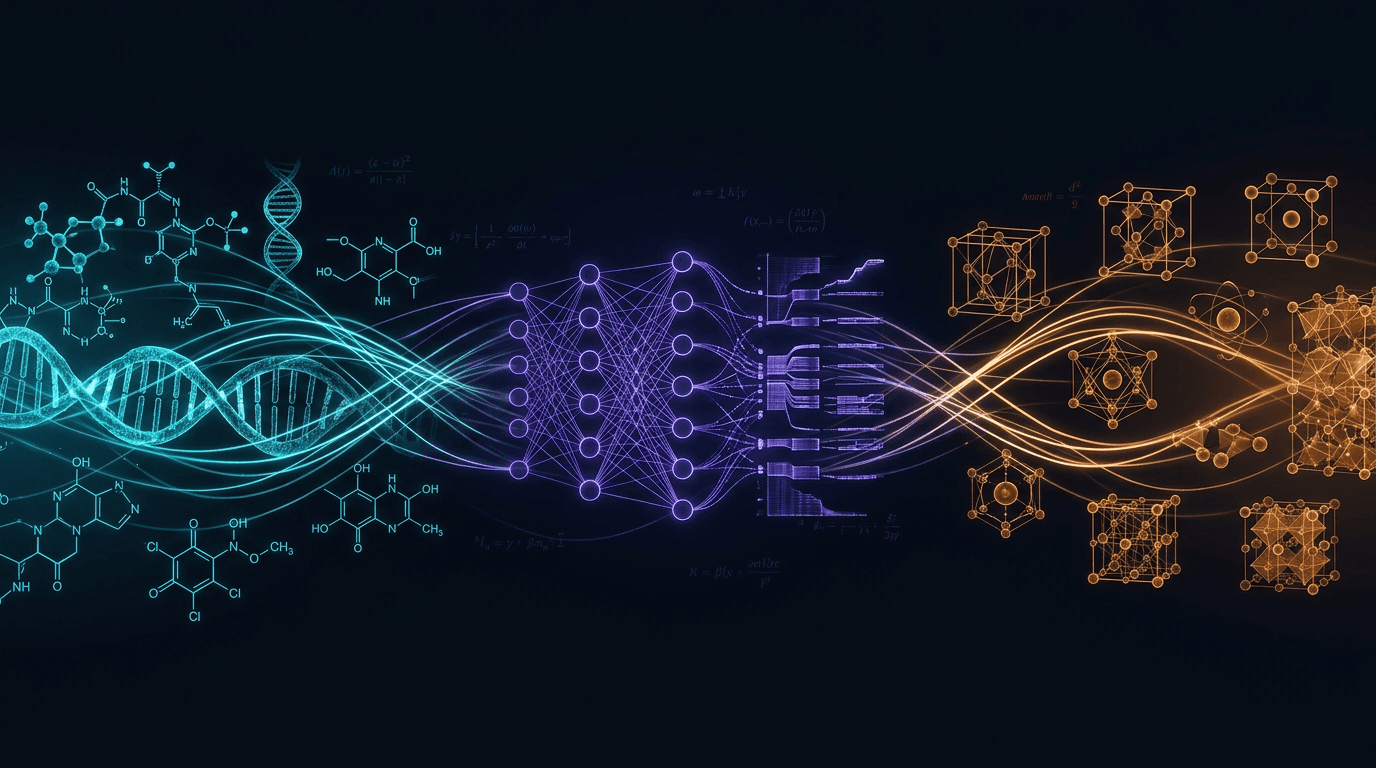
Research Papers
Published research with validation data
Philosophy
Universal engines for your agents
Vareon's research solves the AI and engineering challenges behind both engines — constrained generation, causal inference, symbolic search, governed output — so your agents get first-principle engines, not thin wrappers on foundation models.
This is what makes us different from labs that publish methods. We build the methods and we build the universal engines that deploy them for agent workflows. The research agenda is shaped by engineering constraints: domain-agnosticism, computational tractability, and compatibility with our governance infrastructure.
Our research areas describe how we build agent-first engines — constrained generation, causal learning, symbolic search, physics-informed architectures, quality-diversity optimization, governed output — not what science they're applied to. The same universal engines serve physics, biology, chemistry, materials, and beyond.
Domain Agnostic
Universal engines that work across physics, biology, chemistry, finance, and engineering — so agents are not locked to a single application.
Production Grade
Every method must handle real-world data with noise, missing values, irregular sampling, and distribution shift for reliable agent decisions.
Governed by Default
Research outputs integrate with typed claims, evidence ledger, and reproducibility infrastructure agents can audit and replay.
Interpretable Results
The output is science — equations, graphs, laws — artifacts agents and experts can read, verify, and build on.
Research Area
Constrained Generative Dynamics
The Problem
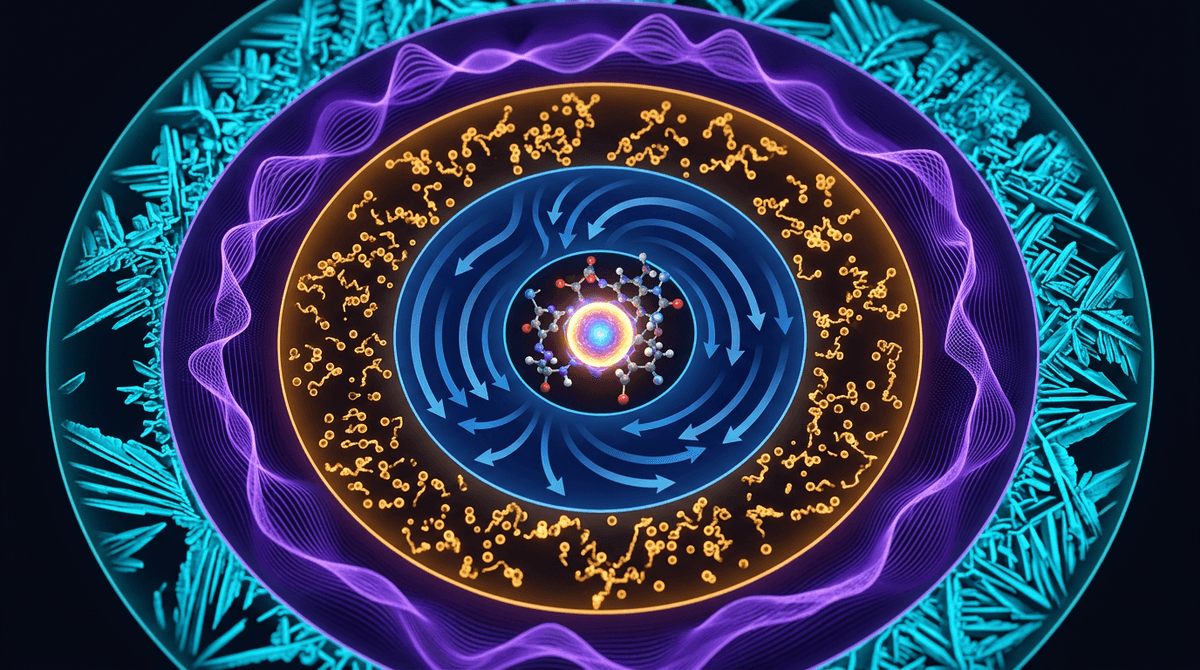
Generative AI produces candidates from learned distributions, but in scientific domains most generated outputs are physically invalid. Post-hoc filtering discards 90%+ of candidates, wasting compute and providing no guarantee that surviving outputs are truly valid — only that they passed a finite set of checks.
Our Approach
We build engines that enforce physical constraints during generation, not after. Bond lengths, coordination numbers, symmetry groups, and charge neutrality are structural properties of the generation process itself. Every output is valid by construction — so agent-driven generation campaigns do not burn cycles on invalid candidates. This is the core architecture behind MatterSpace, the universal generation engine.
Powers: MatterSpace — universal generation engine
Research Area
Causal Structure Learning
The Problem
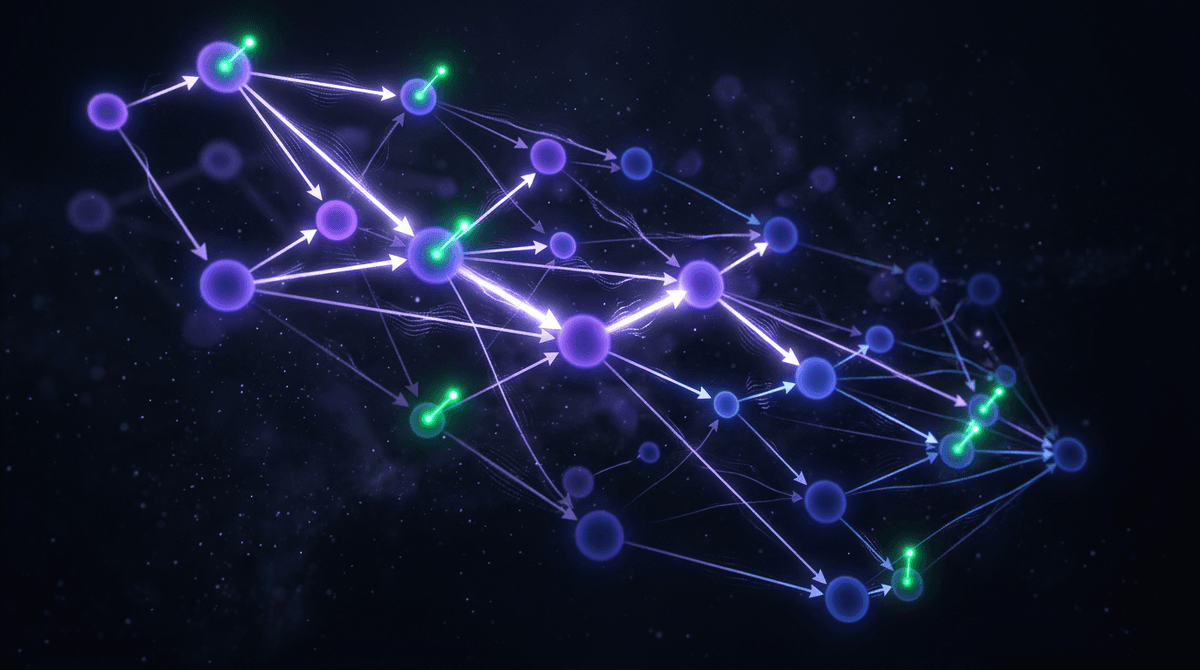
Correlation-based models reveal statistical associations but cannot distinguish cause from effect. When gene A and protein B co-vary, a standard model cannot tell whether A causes B, B causes A, or both are driven by an unmeasured confounder. This distinction is critical for intervention design.
Our Approach
We build engines that recover directed causal graphs from observational data. Our Causal Dynamics Engine (CDE) separates genuine causal edges from spurious correlations and actively designs targeted experiments to resolve ambiguous relationships — giving agents a causal map for planning interventions instead of correlation-only guesses. CDE is patent pending in the United States and other countries.
Powers: ARDA (universal discovery engine) — CDE mode
Research Area
Symbolic Search & Distillation
The Problem
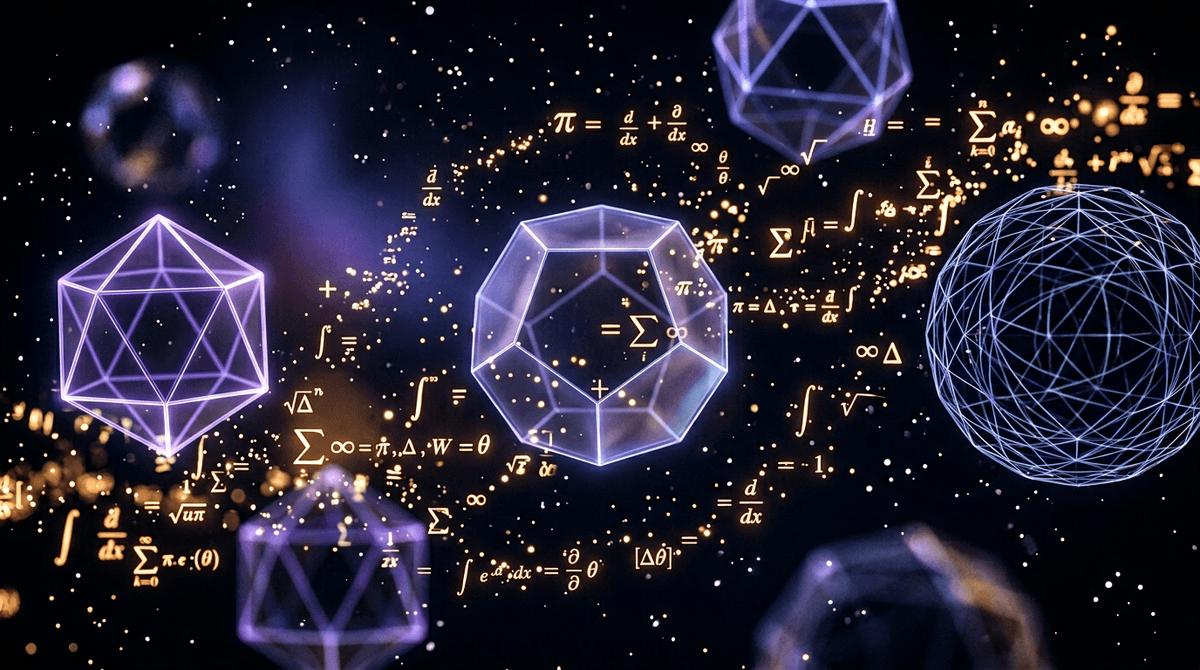
Scientific progress depends on discovering interpretable mathematical laws — not black-box predictors. A model that predicts the next position of a pendulum cannot reveal the governing equation. Existing ML approaches treat data as opaque and produce models that cannot be inspected, verified, or generalized.
Our Approach
We build engines that search for closed-form mathematical laws directly from data. Our methods discover ordinary, partial, and stochastic differential equations across domains. The output is interpretable mathematics — equations agents and domain experts can read, verify, and compose into downstream reasoning.
Powers: ARDA (universal discovery engine) — Symbolic & Neuro-Symbolic modes
Research Area
Physics-Informed Neural Architectures
The Problem
Standard neural networks treat physical data as generic tensors with no structural inductive bias. They do not respect conservation laws, symmetries, or the Hamiltonian structure of physical systems. They require enormous training data and still produce physically inconsistent predictions.
Our Approach
We build neural architectures with conservation laws, variational principles, and symmetries baked into the structure. These architectures learn from less data and produce outputs that are physically consistent by construction — not by post-hoc correction — so agents get reliable surrogates for simulation and discovery loops.
Powers: ARDA (universal discovery engine) — Neural mode

Research Area
Quality-Diversity Optimization
The Problem
Scientific and engineering design problems are multi-objective, constrained, and defined over complex, non-convex landscapes. Standard optimization methods either collapse to a single optimum or ignore the diversity of solutions that scientists need to evaluate trade-offs.
Our Approach
We build search algorithms that maintain structured archives of diverse, high-quality solutions across competing objectives. These methods drive both ARDA discovery campaigns and MatterSpace candidate generation — so agents explore Pareto fronts and trade-offs instead of collapsing to a single myopic optimum.
Powers: ARDA discovery campaigns & MatterSpace optimization
Research Area
Governed AI Systems
The Problem
Without structural governance, AI outputs are one-off analyses that cannot be audited, reproduced, or composed across teams. Science demands that results survive scrutiny. Most AI systems produce unstructured outputs with no provenance, no falsification testing, and no deterministic replay.
Our Approach
We build governance infrastructure — typed claims, evidence ledger, Truth Dial tiers, deterministic replay — that makes AI outputs production-grade. Every discovery is a structured artifact with full provenance agents can chain, audit, and replay — not a paragraph lost in a report. This infrastructure runs across both ARDA and MatterSpace.
Powers: Governance across ARDA & MatterSpace (agent-ready artifacts)
Collaborate with us
We partner with research institutions, national laboratories, and industry R&D teams on scientific discovery challenges. If your problem requires understanding — not just prediction — we want to hear about it.