Advanced Technology
Robotics & Autonomous Systems
Identify governing dynamics of robotic systems — kinematic laws, control equations, and environmental interaction models.
One of 34 industries across 8 sectors served by ARDA — the research discovery engine.

The Challenge
Why Robotics & Autonomous Systems needs a new approach to discovery
Robotic and autonomous systems operate under complex physical dynamics — multi-body kinematics, contact mechanics, sensor-actuator coupling, and environment interaction — where the governing equations determine operational performance, stability, and safety margins. These systems generate rich sensor and actuation time-series during development and field operation, encoding the mathematical relationships between control inputs, mechanical response, and environmental forces. Despite decades of analytical robotics research, real-world system dynamics frequently diverge from textbook models due to friction, compliance, wear, and unmodeled environmental factors that accumulate over the course of deployment in unstructured settings.
Traditional robotics modeling relies on first-principles derivations — analytical mechanics, standard kinematic parameterizations, rigid-body assumptions — that provide clean analytical frameworks but struggle to capture the full complexity of real hardware in unstructured environments. Contact dynamics, flexible-body effects, and sensor noise introduce discrepancies between model predictions and observed behavior that grow with system complexity. System identification methods can calibrate model parameters, but they require pre-specified model structures and cannot discover previously unknown dynamics. As robotic systems grow more complex and operate in less controlled settings, the gap between assumed and actual governing dynamics becomes a primary barrier to reliable autonomy.
The ARDA Approach
How ARDA transforms robotics & autonomous systems
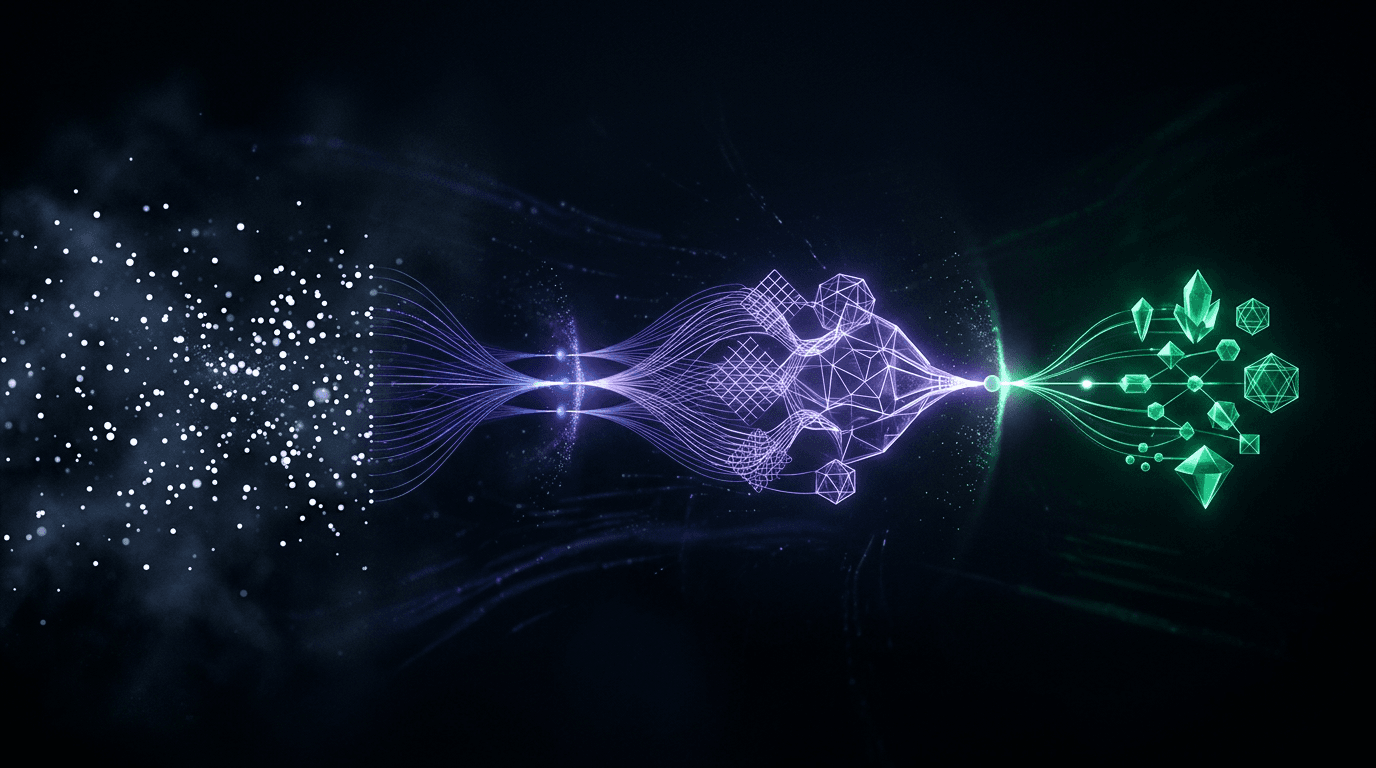
ARDA discovers the governing dynamics of robotic systems directly from sensor and actuation data, without requiring engineers to specify model structures in advance. By ingesting time-series from joint encoders, force-torque sensors, inertial measurement units, and vision systems, ARDA identifies the mathematical laws that describe how robotic systems actually behave — including the friction, compliance, and coupling effects that analytical models omit. ARDA's discovery produces typed scientific claims about governing equations, each with confidence bounds and evidence provenance, giving robotics teams validated dynamics models grounded in empirical hardware behavior rather than idealized assumptions.
ARDA's physics-informed neural architectures respect the energy conservation and symmetry properties of mechanical systems, producing dynamics models that are physically consistent by construction. Its physics-informed architectures handle the rotational and translational symmetries inherent in rigid-body dynamics, while the symbolic discovery mode extracts closed-form control laws and interaction models that engineers can inspect and embed directly into real-time control software. The governance stack ensures that every discovered dynamics model includes deterministic replay capability, enabling teams to reproduce results across hardware revisions and validate that identified governing equations hold under new operating conditions.
Discovery Engine
The engine behind the discovery
The Neuro-Symbolic discovery mode is particularly well suited to robotics, where complex sensor data requires neural encoding but the resulting dynamics models must be interpretable for control design and safety certification. Neural discovery with physics-informed architectures handles the geometric symmetries of mechanical systems, while symbolic distillation extracts the closed-form equations that control engineers require. The Causal mode identifies causal relationships between environmental conditions, control actions, and system responses — distinguishing whether performance degradation stems from actuator wear, surface conditions, or control parameter drift. ARDA's regime classification detects transitions between distinct operational modes automatically.
Symbolic
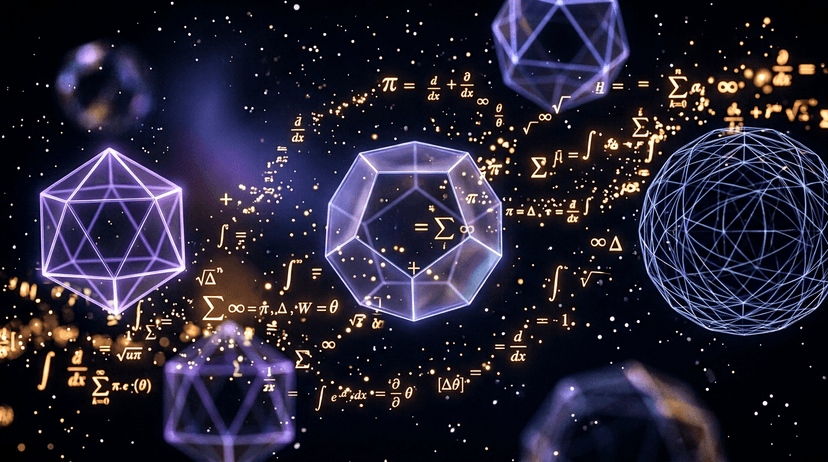
Discovers closed-form governing equations — the explicit mathematical laws that describe how systems behave. Produces human-readable, interpretable formulas.

Neural
Deploys physics-informed architectures for high-dimensional, symmetry-rich data where closed-form solutions may not exist.
Neuro-Symbolic
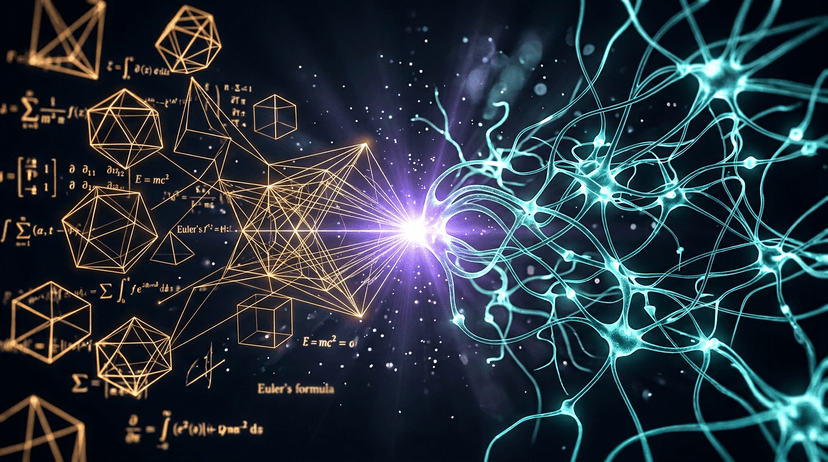
Combines neural encoding with symbolic distillation — learns complex representations first, then extracts interpretable governing laws from those representations.
CDE
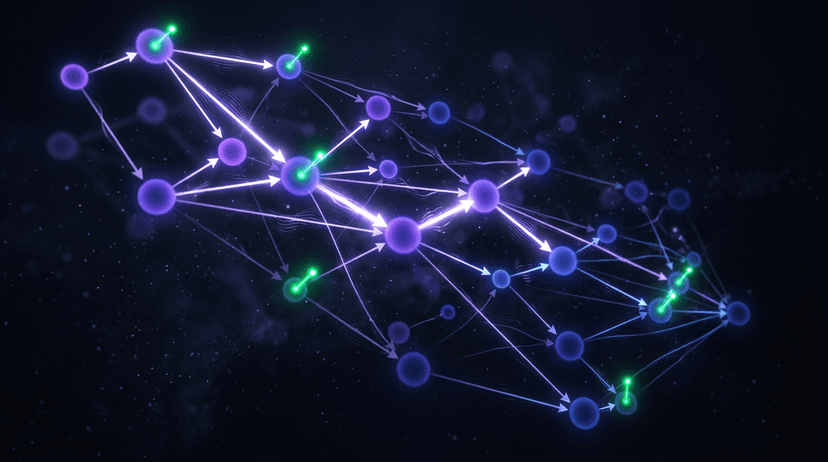
The Causal mode, powered by ARDA's Causal Dynamics Engine (CDE), discovers true cause-and-effect relationships from observational data — identifiable causal graphs, regime classifications, and intervention predictions.
Typed Scientific Claims
What ARDA discovers
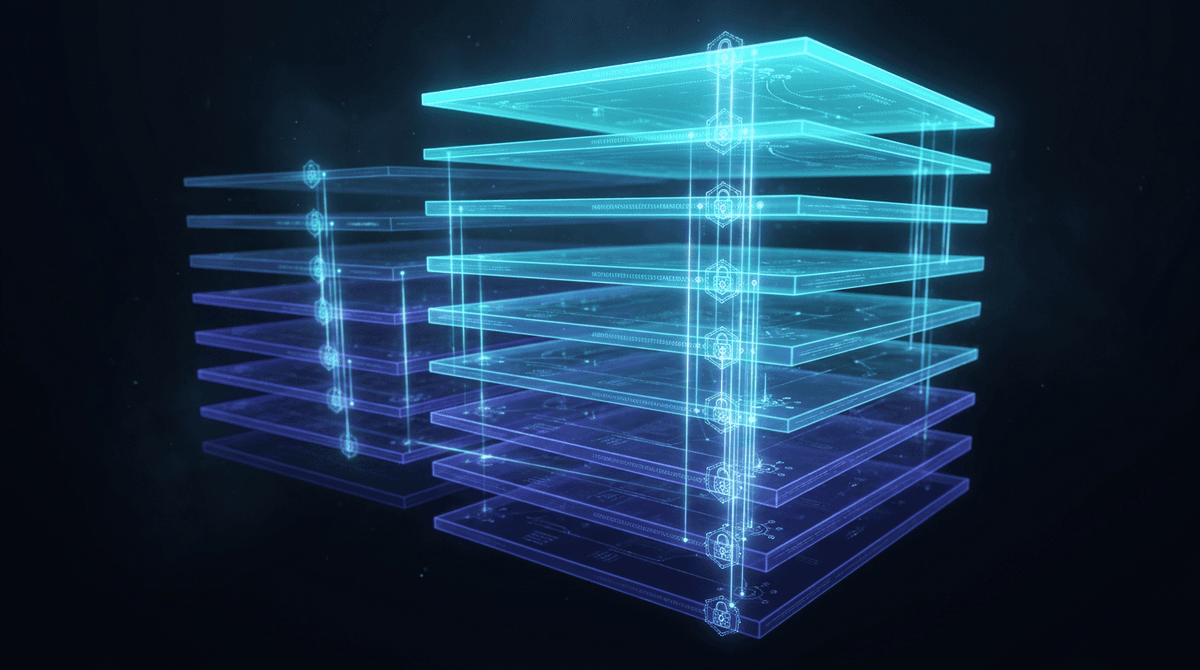
Every discovery ARDA produces is a typed scientific claim — not a black-box prediction, but a governed, reproducible, auditable piece of scientific knowledge with full provenance.
- Kinematic governing equations
- Contact dynamics models
- Control law identification
- Sensor-environment interaction laws
- Multi-body coupling dynamics

Governed Discovery
Built for regulated industries
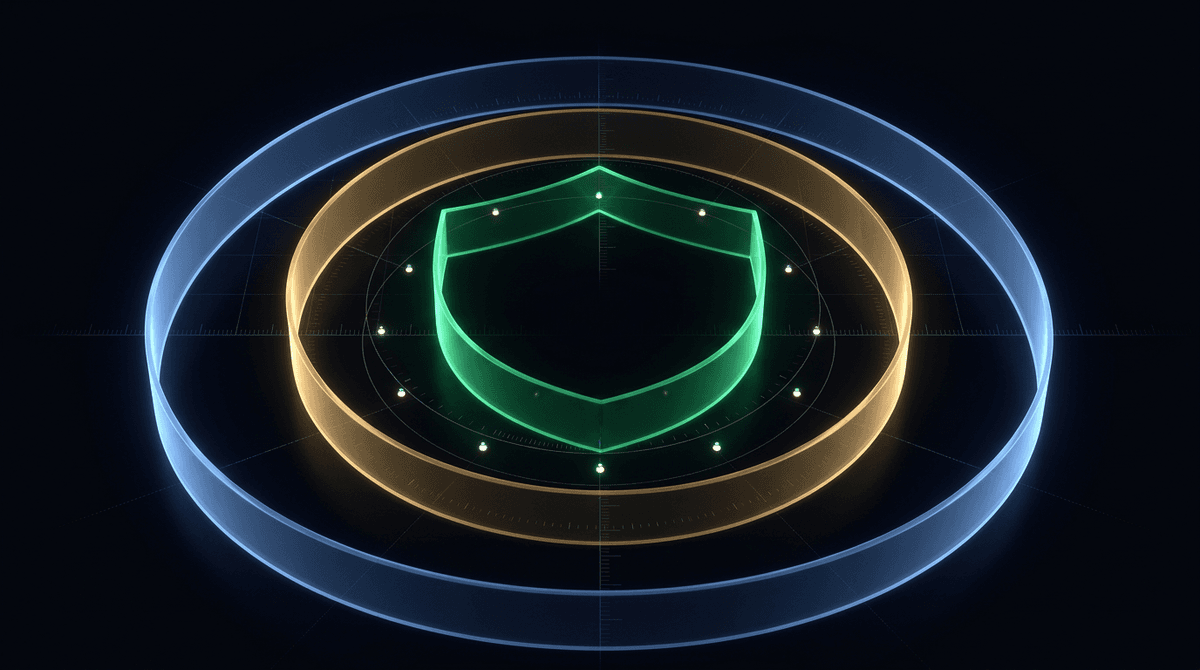
Every discovery ARDA produces carries governance metadata: a Truth Dial setting that controls the confidence threshold, an evidence ledger entry with deterministic replay recipe, and negative control results including bootstrap stability, out-of-distribution testing, and feature shuffle validation.
For robotics & autonomous systems, this means every scientific claim is auditable, reproducible, and suitable for regulatory submission, peer review, or board-level decision-making. The governance stack is not optional — it is embedded in every discovery run.
Same sector
Related industries
Semiconductor & Electronics
Discover physical laws governing semiconductor device behavior — switching dynamics, thermal dissipation, and process optimization equations.
ViewQuantum Computing Research
Discover decoherence dynamics, gate error laws, and qubit interaction equations from quantum hardware characterization data.
ViewAI & Machine Learning Research
Discover governing dynamics of training processes — loss landscapes, optimization trajectories, and scaling laws.
ViewGet started
Start discovering with ARDA
Whether you are exploring robotics & autonomous systems data for the first time or scaling an existing research programme, ARDA adapts to your workflow. Create an account, connect your data, and let the engine surface the governing laws hidden in your experiments.